
By Kevin OBrien on May 7, 2026
MASTER FIDELITY 'NADAC D & C' DAC / CLOCK REVIEW
We first caught wind of the NADAC D when reading about a '2025 Product of the Year Award' from Part-Time Audiophile, right around the 2025 holidays. This caught our attention, because these guys review A LOT of gear in one year's time. The sheer amount of high-end gear that goes in and out of the ptA review team's listening rooms is alarming. The fact that this particular manufacturer out of Canada, Master Fidelity, made the top of that list for all of 2025 is impressive. We know Scot Hull, the ring-leader of ptA. He's a good guy. When his team shouts something out from the rooftops, we listen.
With that being said, how does one begin to write about a product that is changing everything in High-End? Great question. We are continuing our coverage of this DAC after picking up the Master Fidelity Line at AXPONA 2026. What does this say? We were blown away by what we heard in Chicago, so much so, that we brokered a deal right then and there. We can confidently say, right now, after spending three weeks with the NADAC D (fully broken-in & up-to-date), we are more than glad we jumped in 'head-first'.
It can be risky to go all-in without really being all that familiar. It's what can make or break you as a business. What we heard in the GTT Audio room at AXPONA 2026 didn't seem like a 'risk' per say. It seemed like a one-off opportunity. That insight has proven itself to be invaluable. Let us explain...
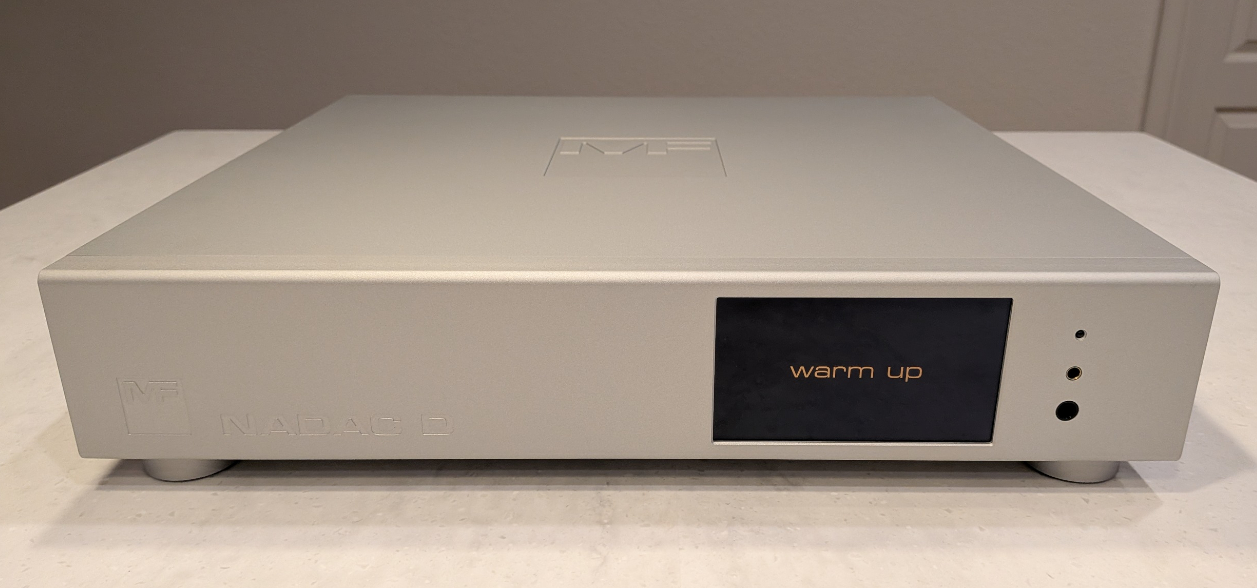
The moment we powered up our demo NADAC D, we knew we made the correct choice. We've heard a lot of gear, but not like this. Enthusiasts like to talk in terms of 'flavors'. This is an entirely new set of ingredients! Sounds floated effortlessly outward from our demo gear and filled the entire space and then some. Forget about walls and ceilings. The most striking feature that stood out right away: the tone. What we heard was natural and organic, not like digital at all. Think 'analog' here, which is exactly what was burned into our brains, similar to a vinyl-listening experience. Keep in mind, we played the unit for 400 hours prior to making any conclusions. Also, we've heard the reference pieces from the likes of EMM Labs, Playback Designs, Berkeley Audio, Bricasti Designs, and Lampizator. We know what 'good sound' is as far as DACs go as we've heard quite a few over the years.
We've also been doing this long enough to know how to prepare for a review such as this one. You may as well burn-in the DAC prior to evaluation, or you'll just torture yourself with anticipation. We know better. What we initially heard was a product that was completely sorted, and completely astounding as far as digital playback standards go. It's akin to having your own reel to reel but without the need to source the tapes. WOW! Don't tease yourself any further, go and hear this DAC as soon as you can.
As far as how MF is accomplishing this, we've heard they are producing their own custom single-bit chips from the ground up, because there's simply nothing available that is up to MF's standards. This is why the cost of admission is so high. If you make something custom in relatively small quantities, you are going to pay. That is exactly what is happening with the MF NADAC series. But we're so glad it is. When you hear what MF is doing, you won't want to listen to anything else, we assure you. Converters costing as much or more do not stand a chance. In fact, they sound somewhat 'off' after hearing the MF solution.
This DAC sounds analog. When we say 'analog', we mean smooth, edgeless, refined sound that you can listen to for 12 hours uninterrupted. This is high praise. We have listened to some "high-end, cost-no-object, digital solutions", and were left scratching our heads. From what we can tell, every other manufacturer is using off-the-shelf chips. There are some exceptions, as there are to every rule. But, if these other manufacturers are making truly custom chips, they are doing something incorrectly (their solutions do not sound like MF's). With Master Fidelity, we are talking about next-level silicon.
More importantly, do not make any conclusions until you hear this box with your own ears. You may find yourself changing your system configuration to accommodate the NADAC sound. We are doing just that. It's that good. There's no alternative at this point because once you hear the NADAC D, you cannot un-hear it. Enough said.
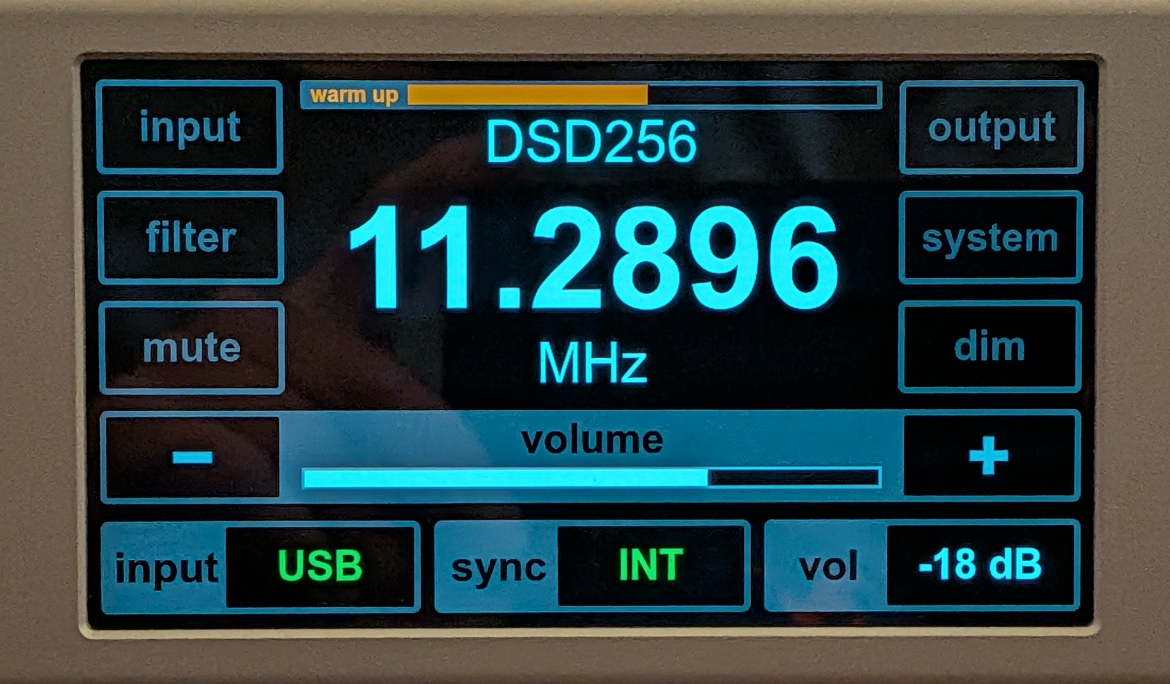
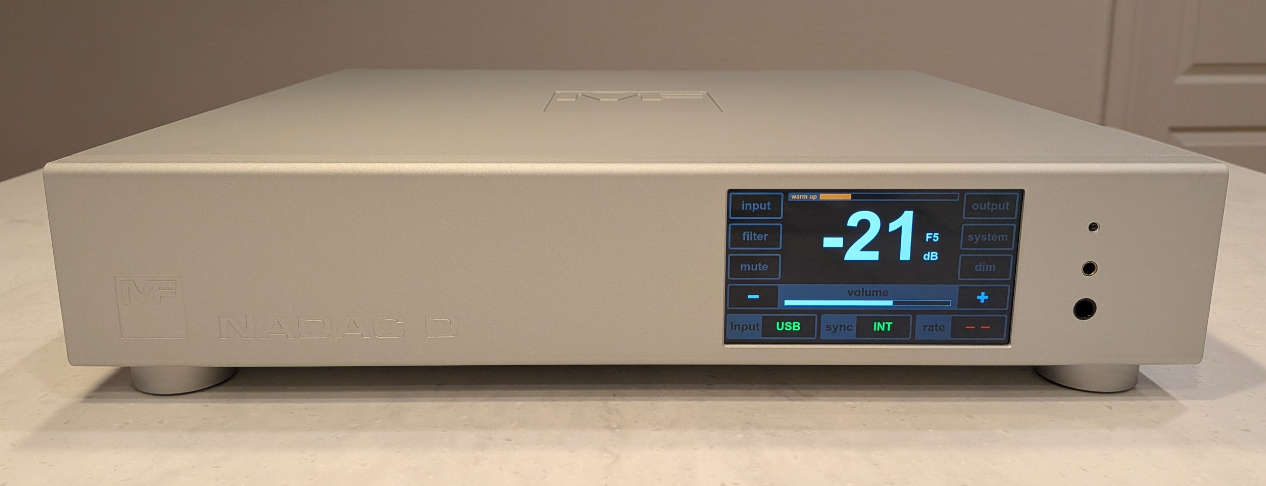
As far as functionality goes, you can use the touchscreen display to modify settings until your heart is content. We found the menus easy to navigate / understand and selections extremely intuitive. In fact, we hooked up the NADAC D for the first time without instructions, it's that easy (using our YFS M4 Mac Mini). The touchscreen gives you everything you need, as far as options go. You can adjust the screen brightness, and most any other parameter needed. Unfortunately, you cannot adjust the gain settings (or the 'left-right' balance) for the converter output. This is something we would like to see in the future from MF. This coincides with what is available from EMM Labs for their DV2 V2 offering, which should also be included with this piece. We say this because we "ran out of volume" on a few DSD tracks we were auditioning with. More gain please. These albums are in the minority, but none the less, they do exist. This same condition could present itself if the user is implementing extremely low efficiency speakers. In the 80 dB range. A "standard gain" and "high gain" setting would rectify this issue. At the end of the day, this issue only presents itself on a rare occasion, but was worth noting.
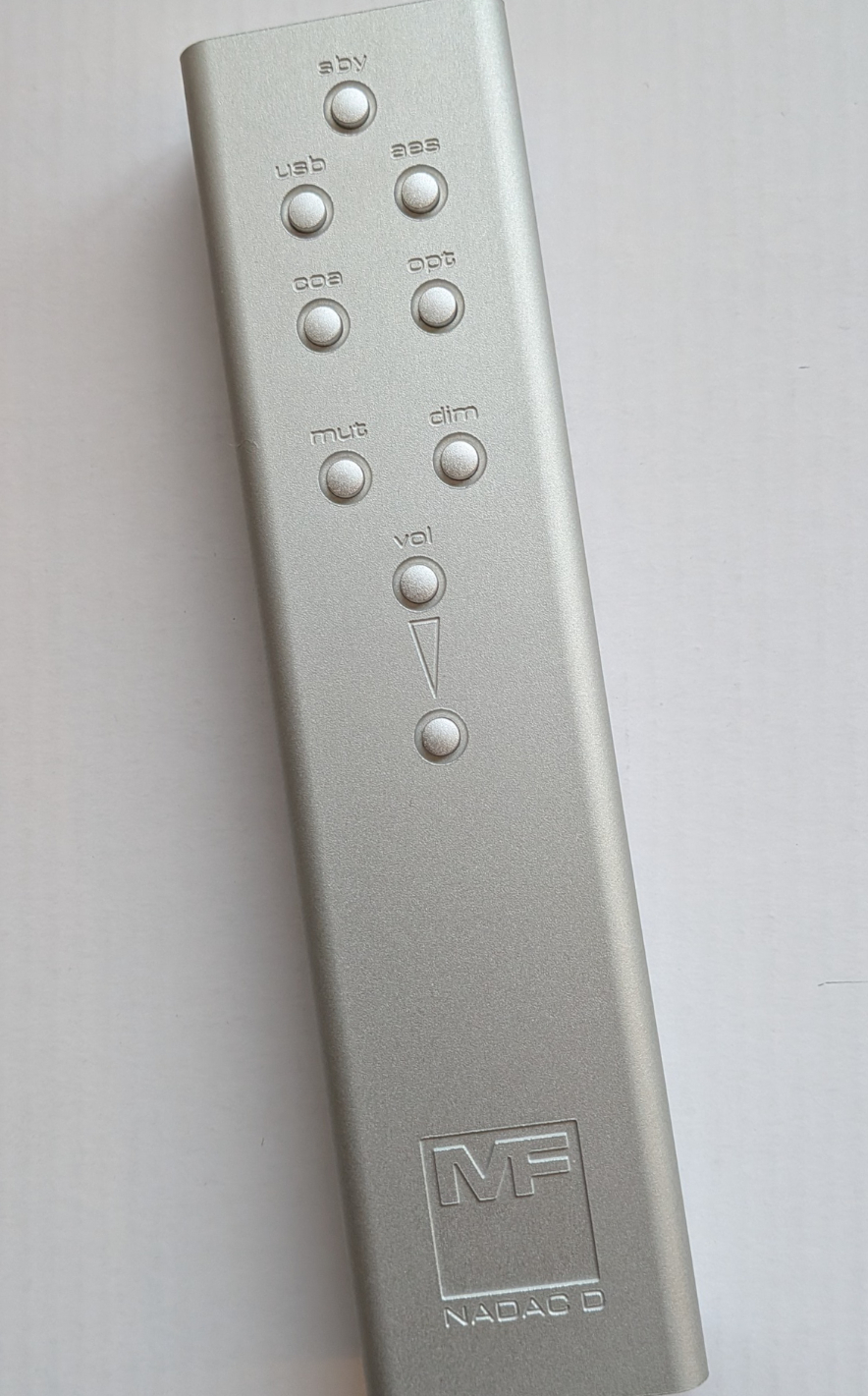
This brings us to the age-old question of whether or not to use a preamp with this DAC. If you have a reference pre, and you love it, by all means use it. If you don't have a reference preamp, use the included volume control until you can save up for one. A preamp is not a requirement with the NADAC D, but we have a feeling you'll really appreciate one in the long run. Why? Mainly the gain issue we just mentioned, which will only come into play for the outliers, but the attenuation steps the NADAC D offers may also bother you. Volume is stepped in 3 dB increments, which for some, may not cut it. We find it's just fine. In fact, we actually prefer it, which was not what we expected upon first-look at the NADAC D specs. We usually end up "searching" for the proper volume while listening. With the NADAC D, we find a level that sounds close enough and then we leave it alone. This is the complete opposite reaction we have with our other 1 dB stepped attenuators that we endlessly 'play with' until we go crazy. Ultimately, you will have to be the judge.
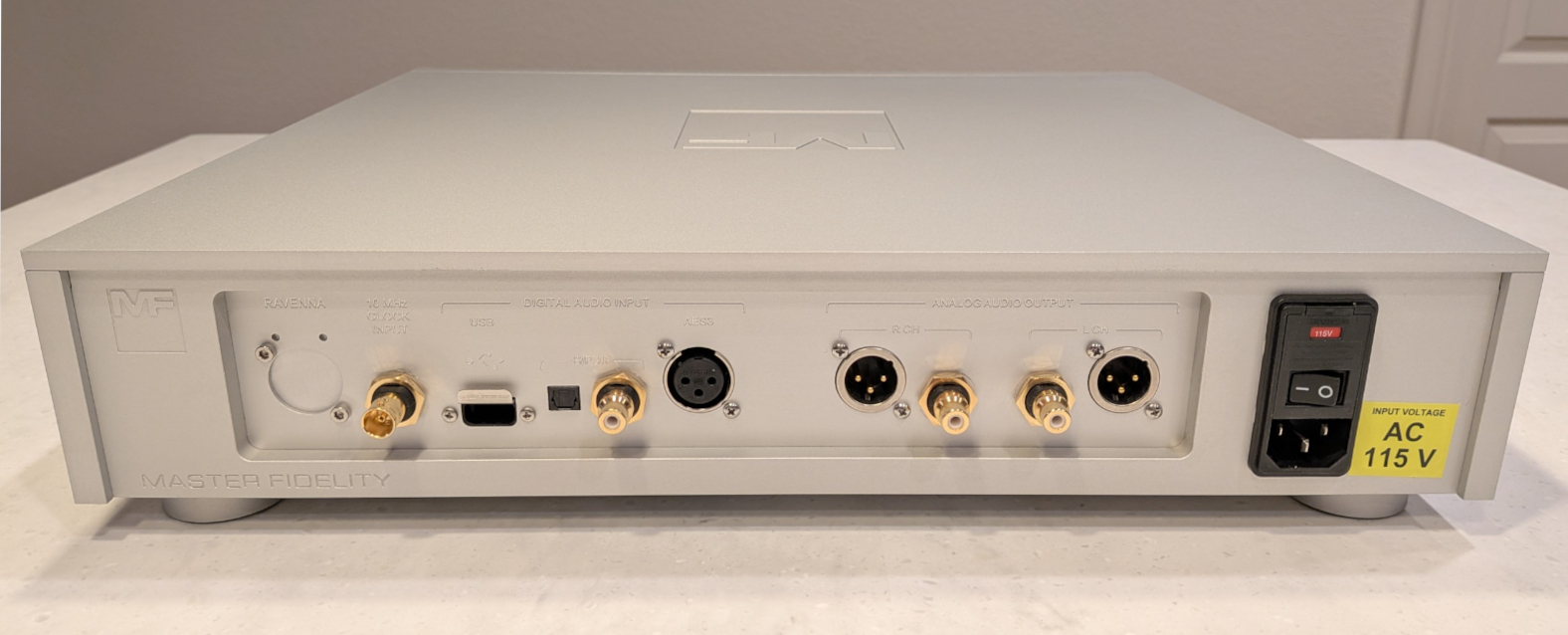
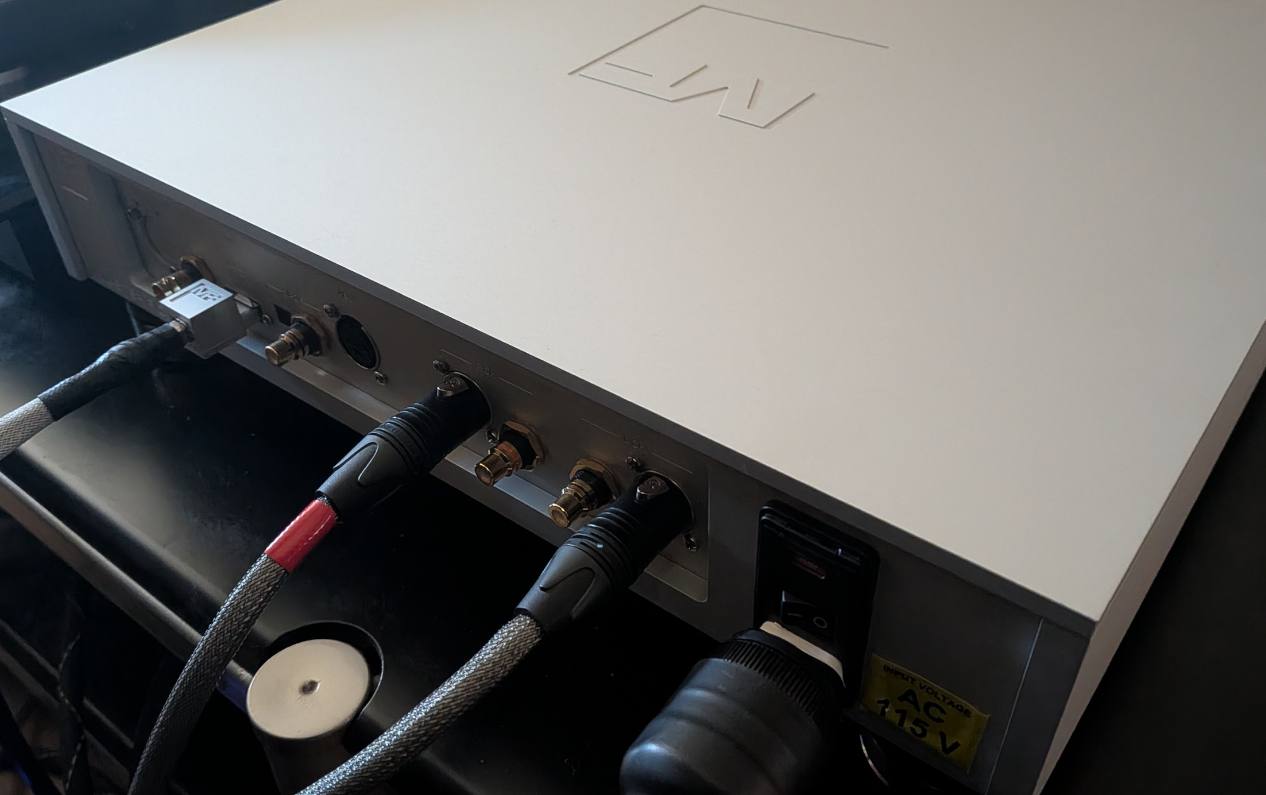
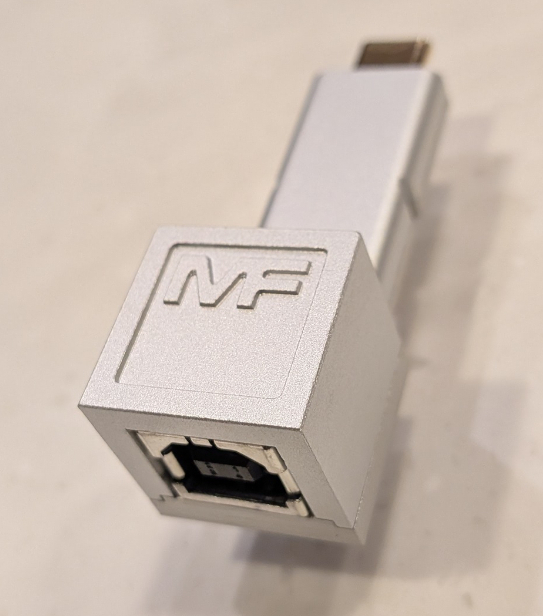
The NADAC D USB input may also upset you, if you're like us. We love using USB A to B cables. The NADAC D requires the use of a USB C cable. There's only so many 'Audiophile-Grade' USB C cables on the market. If you do NOT want to use a USB C cable, you must use the Master Fidelity USB C to B adapter. (Standard USB C to B adapters will not work with the NADAC's extra deep USB input) YFS also makes one heck of an 'Audiophile USB cable', so we're not about to go back to the drawing board, at least not quite yet. Master Fidelity has their own USB C cable that is available for purchase directly. The MF USB C to B adapter, which is pictured below, is available directly from MF ($500 USD MSRP). This latter solution seemed like the best idea to us, and allows for the most versatility. If you already have a proper USB C cable then don't worry about it.
You may ask yourself, after reading the [somewhat outdated] Absolute Sound review of this same digital piece, how do you know if you have the most up-to-date version of this converter? If your DAC was produced in 2026, you should be all set. If it's older, it could be up in the air. The good thing is, these converters started their lives in mid-2024, so there's not many units "in the wild" that have original hardware / software. The software side of things is fairly straightforward. Feel free to shoot us an inquiry, and we'll do our best to help. The current software version, as of this review, is 1.5.2. If you have anything lower than that you're obviously not current. The good thing is, if you bought your DAC in 2026, but don't have the latest software, that's an easy fix. If your DAC is from 2025, it may need to be verified by the manufacturer for the most current hardware configuration, and things get a little less clear. You will most likely need to send your DAC to the factory in Vancouver, Canada for hardware updates if you have one of the original NADAC Ds. As far as Windows 11 drivers go for the Amanero USB input, they are located here. These are the most up-to-date drivers as of this review being published.
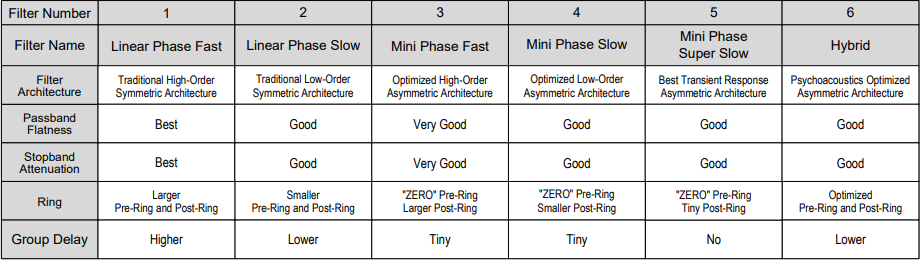
Now we'd like to touch on the various "filters" that are available with the NADAC D. There are 6 filter options to be exact. We ended up going with Filter 5, as it best represents the EMM Labs / Playback Designs sound we have come to love. This makes the sounds that come out of the NADAC D sound "real", not like a "copy-paste" scenario. With no pre or post ringing, this is the filter choice that best suits us. Here's a link to the user manual, in case you need it. The manual clearly shows the designations between the different filter options. We have the chart below for your convenience. As always, your mileage may vary.
Let us tell you about the external master clock that partners with this crazy DAC. It's called the NADAC C. Jitter is the enemy and this master clock will get you down to 66 femtoseconds @ 10 Hz. Phase noise comes in at an impressive -122 dBc @ 1 Hz. The NADAC C will run you the exact same outlay as the NADAC D ($27,500 USD MSRP). We could not justify the spend on such an expensive ask when we made our NADAC Demo DAC purchase. If you have the funds, by all means. We believe the NADAC D combined with the NADAC C is the ultimate digital converting solution, regardless of money. But, it will cost you. It will cost you to the tune of $55,000 USD. Ouch. But, after our intimate experience with the D, we feel we need to add a C. We have plans to purchase the matching external clock in the near future, well, as soon as funds permit. Because once you hear what a solo NADAC D can do in your system, there's no reason not to lust for the next level. Although, with just the NADAC D, you're already there in so many ways.
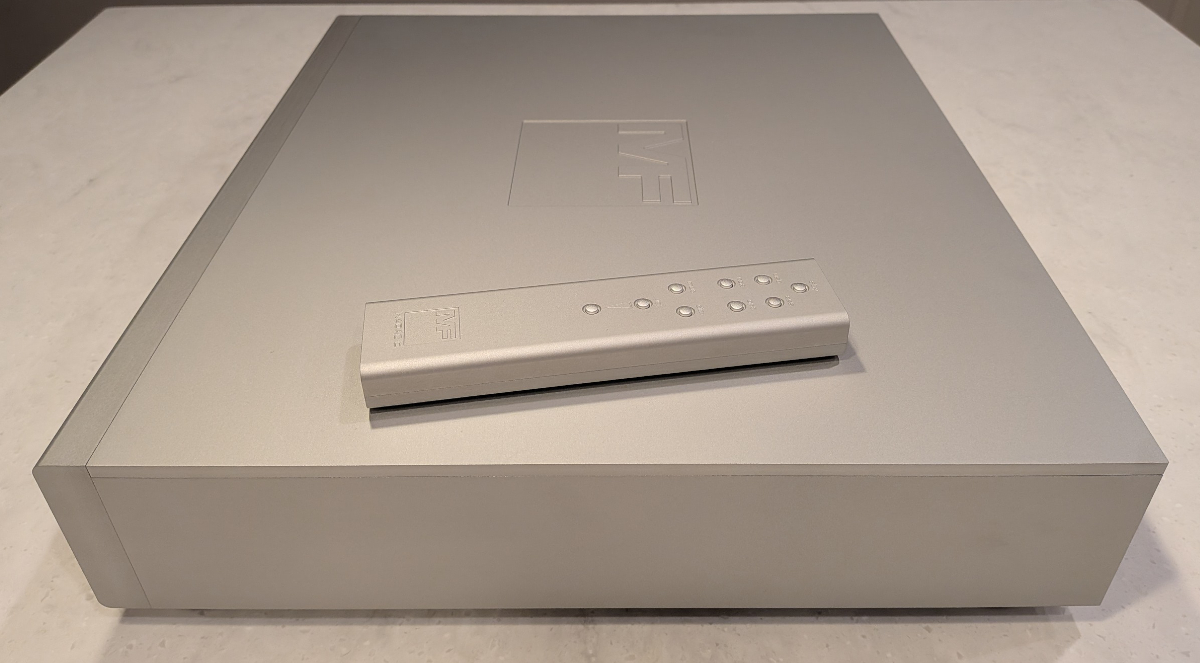
When you hear the amazing achievements of the NADAC D sans clock, you won't need to concern yourself with such matters. Well, that is, until it's time for an upgrade. Because this audio journey never ends does it? Drop us a line if you'd like to figure out a way into one of these units (or both). We'll go easy on you, we promise.
Thank you for spending your time with us.
Until next time...
- KOB
*** UPDATED - 09/21/2026 ***
MASTER FIDELITY 'NADAC C' MASTER CLOCK REVIEW
We finally updated our Master Fidelity stack with the 'C' portion of the NADAC series. This was on our radar for quite some time, but we needed to figure out the money part. Well, we did just that, and here we are. We would like to thank Bill Parish over at GTT Audio for being so patient and allowing us to pick up the DAC portion of the NADAC series first, without going "all in" on the entire stack.
Patience is a virtue, but extremely difficult to put to practice in this hobby. This master clock portion of the NADAC series has been something we have been lusting after since we wrote our initial DAC review above. The wait is over. All we can say is, the wait was worth it. Whether you feel this part of the total picture is worth it for you, that is something hopefully we can answer below.
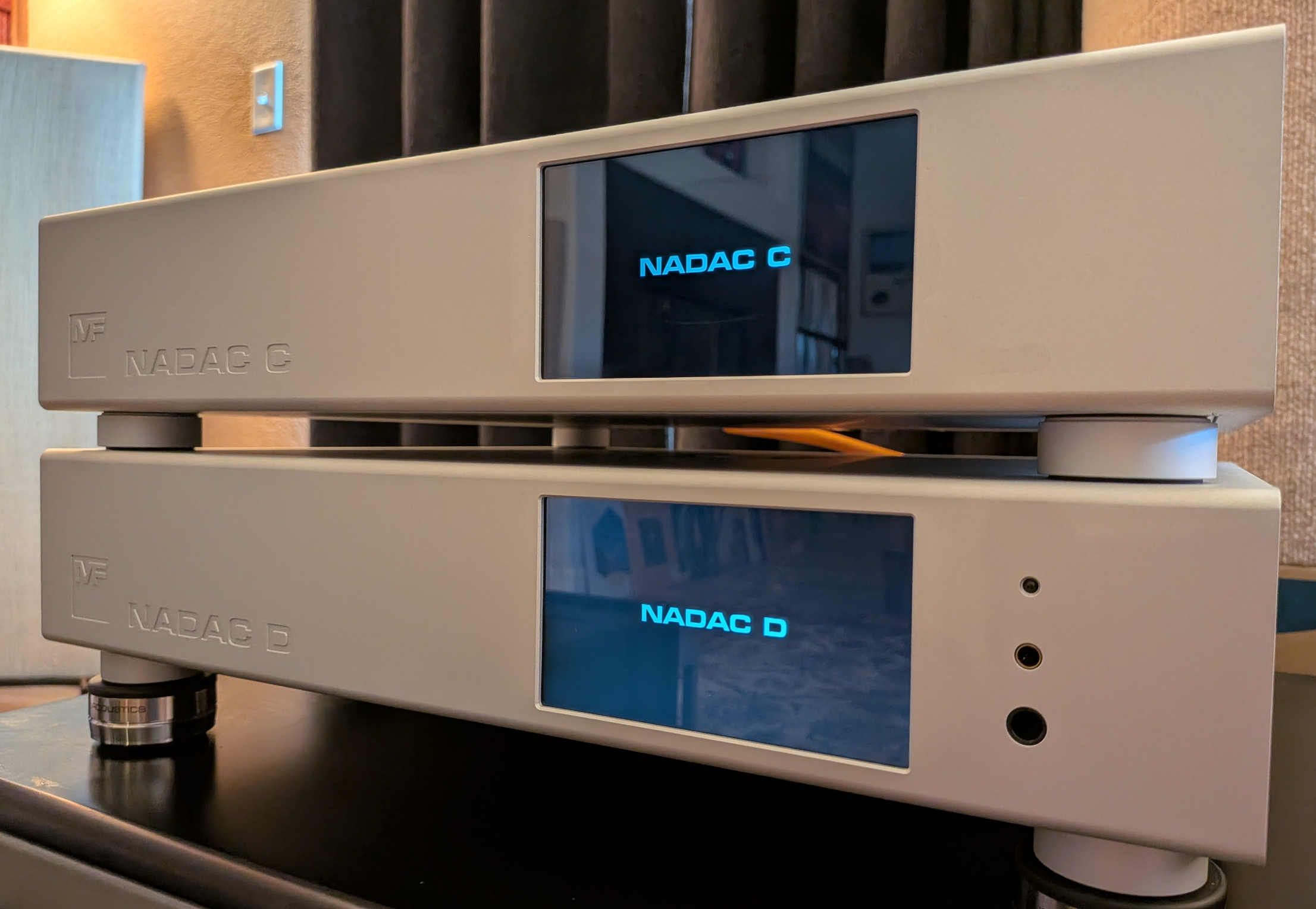
Well, is it worth it? The master clock costs as much as the DAC, which is $27,500 USD MSRP. These are not small potatoes. It took us approximately six months to get our pennies saved, so, we completely understand if this is not for you, based on the price tag alone. With that being said, let's explain our experience with this piece, and it should give you some insight into whether or not it's a good fit for your system.
If you're not into reading long articles, here's what you need to know: the NADAC C is worth the cost of admission IF the rest of your system is worthy and you demand the best of the best. It's that simple, no need to elaborate further, but we're going to anyway below.
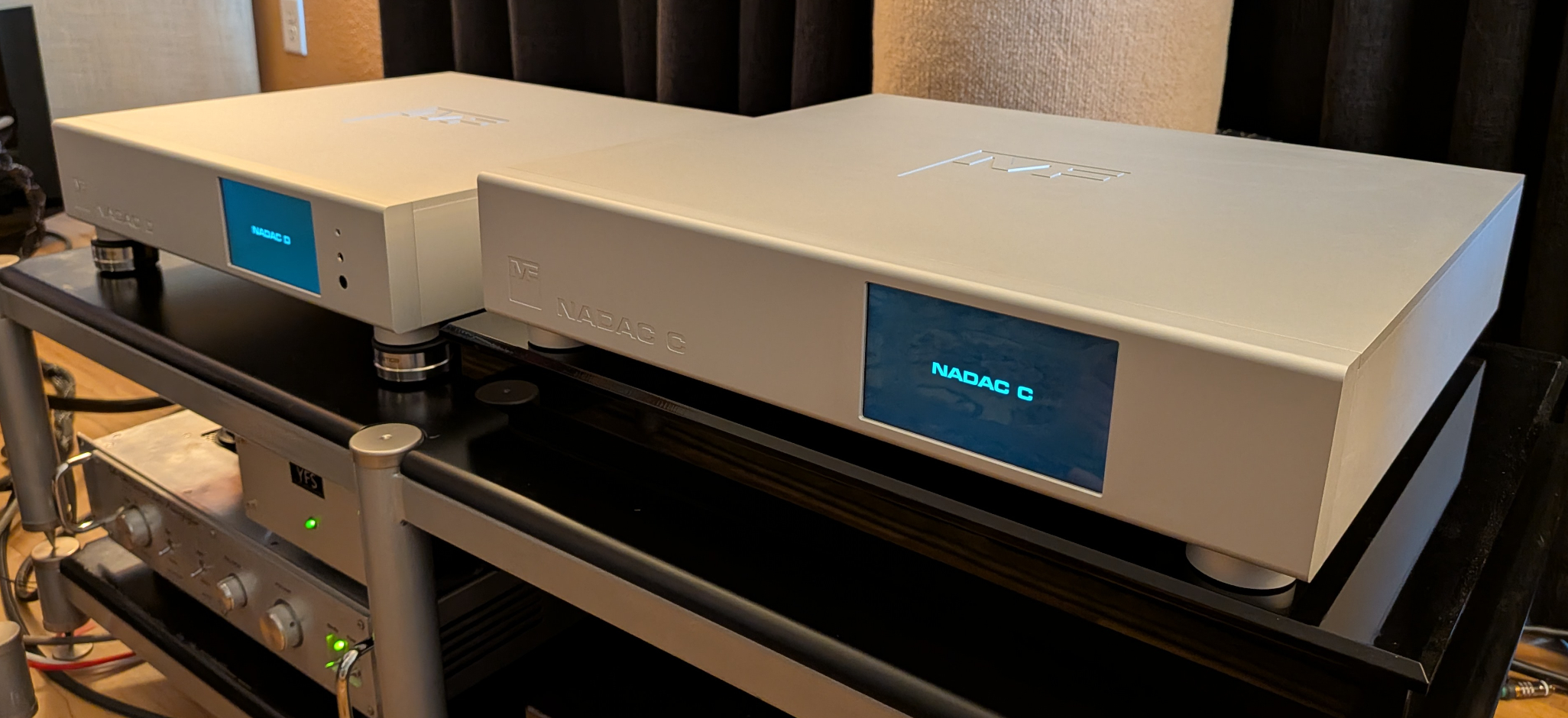
The very first thing we noticed (after burning in the unit for two straight weeks, per MF's instructions) was how this piece integrated with the existing NADAC D. They look identical and the form factor is exactly what you'd expect. This makes stacking easy. Somehow, the feet do not leave marks on the tops of the gear, which is a very nice touch. Interestingly, we had a tough time hearing what the clock could do in our system until we UN-stacked both units. Your mileage may vary, but this was an eye-opener for us. Give it a shot, you may be completely amazed. Also, isolation under both units is a must and a non-negotiable, that is, if you expect to get the most out of your investment here.
As far as performance goes, at first, we were having difficulty putting our finger on exactly what the clock was adding to the music. Once unstacked, it was apparent right away. More PRaT, much more in fact. The music sounded more focused and attack was better. Notes seemed to hang in the air. Detail and separation improved, which made understanding vocals that much easier. Soundstaging was also better. By "How much better?" depends upon your gear and your listening room. None the less, if going after that last bit of performance is worth it to you, then this upgrade will be worth it. (There are five 10 MHz Clock outputs and two Word Clock outputs on the rear panel - plenty of options) Alone, the NADAC D is a stellar performer in its own right. Combine the 'C' with the 'D' and things get as good as we've ever heard them (in our YFS review system).
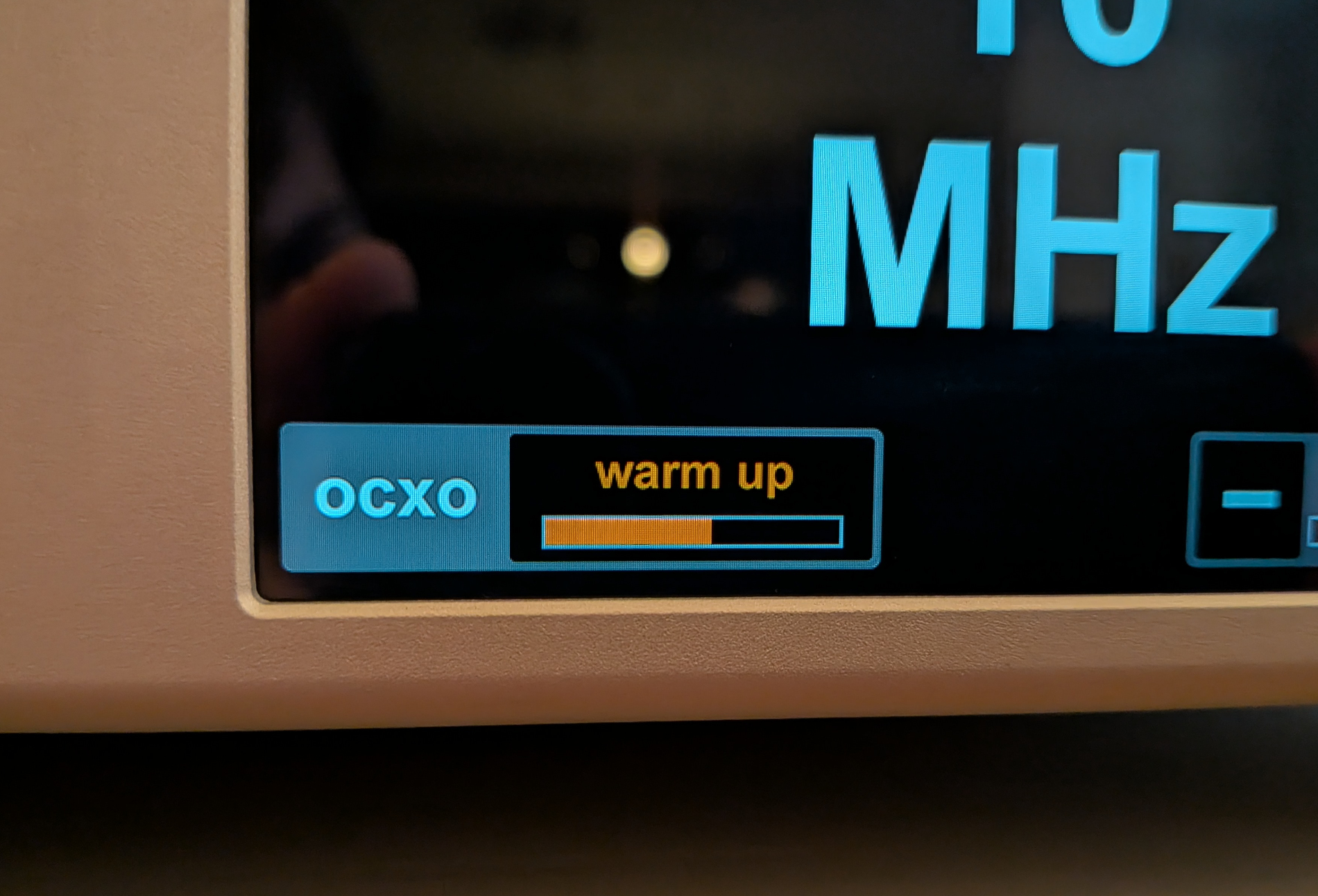
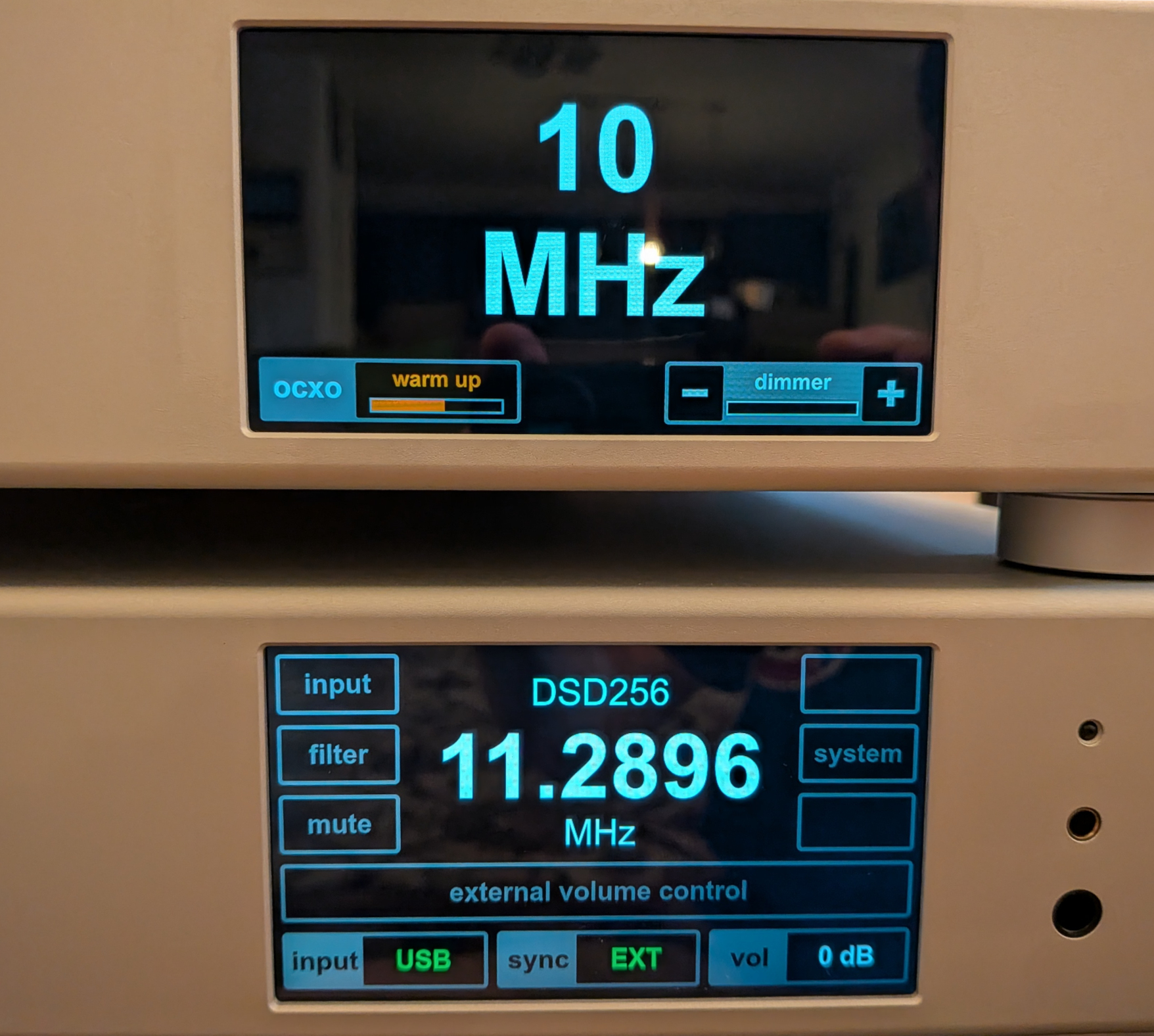
That brings us to another topic worth discussing: warm-up. According to Master Fidelity, the clock takes ~7 hours to warm up, per the front screen indicator (this is the duration needed for the temperature-compensated crystal oscillator to reach proper operating temperature). It takes another 4 to 5 days to reach a completely stable state, and then a total of 14 days continuously powered on to reach its absolute best. If you leave the unit powered on 24-7, that would be the best case scenario. If you cannot do this due to outside factors, wait to listen until the OCXO has reached its 'stable mode' indicated by the front panel. While that's great information to have, we all know we're listening as soon as we power it on. Don't worry, it still sounds great!
These two MF units combined to give us unmatched fidelity in our reference YFS review system. (Without the NADAC C, we still get world-class sound, so don't panic if the Clock isn't within your reach just yet). Using the DAC on its own gives you what we consider to be the "best" digital solution available for your money. Adding the Clock to the DAC gives you what we then consider to be the "best of the best". It's the simplest way to describe the upgrade.
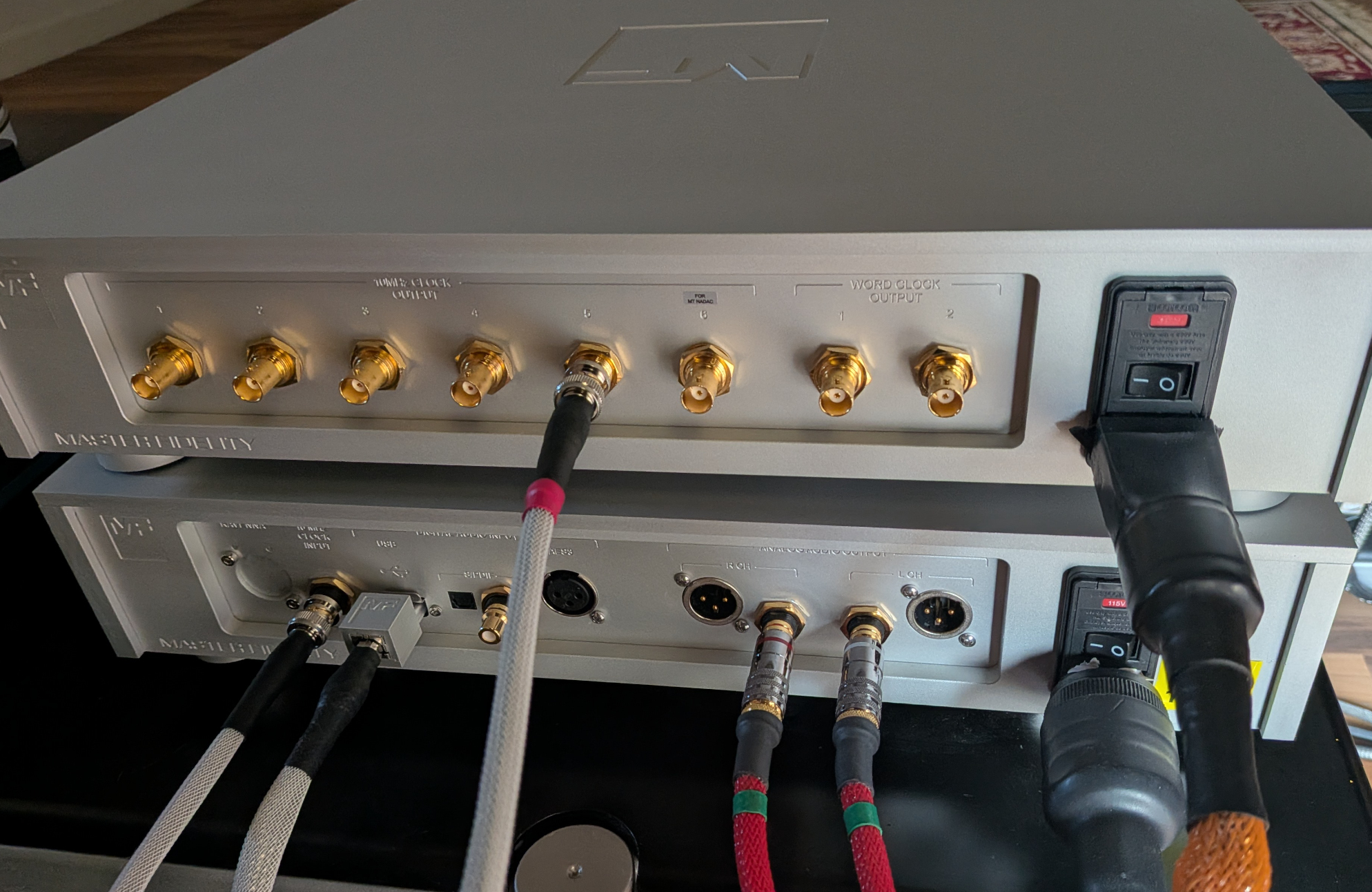
Sure, you can spend more. But we feel you won't reach the point this stack is taking us to in terms of 'sound quality for the money'. This solution provides 'reference sound' that seems to be a "deal" compared to some other lofty, inflated, multi-stack solutions. Move forward with the MF Stack, that's our advice, and hear it for yourself. If you need cables to integrate these two pieces, which includes a pure copper USB and a pure copper 50-Ohm BNC, drop us a line. We have custom YFS solutions that are affordable, comparatively speaking, when put up against the current audio cable landscape. (Why are audiophile cables SO expensive? They don't need to be. Wink-wink)
Feel free to reach out if you have any concerns, need some simple questions answered, or would like more information. That's what we're here for. Well, it's time we get back to listening to our favorite music, the entire reason we went down this path in the first place. Thank you for spending your time with us.
Until next time...
- KOB